GNS183
Clock Module with Multi-GNSS Receiver for GPS, Galileo, GLONASS, and BeiDou
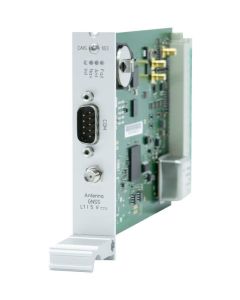
IMS-RSC: Switch Module for Seamless Switchover of Backplane Signals
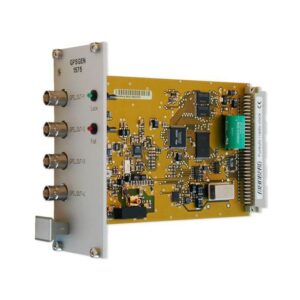
The IMS-GNS is a 72-channel satellite clock module with GNSS technology that has been developed from the ground up specifically for time and frequency synchronisation purposes. The IMS-GNS provides a high-precision, high-accuracy time and frequency reference for your Meinberg IMS system and is designed to receive signals from the U.S. Global Positioning System (GPS), the European Galileo system, the Chinese BeiDou system, and the Russian GLONASS system, providing an impressive range of sources for your Meinberg system to be used anywhere in the world.
How the Meinberg IMS-GNS works
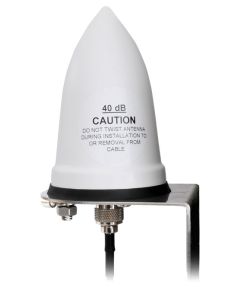
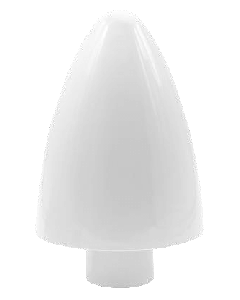
The integrated GNSS receiver requires an external Multi-GNSS L1 antenna to receive signals from GPS, Galileo, BeiDou, and GLONASS satellites.
Once the IMS-GNS is successfully initialised and synchronised, it distributes a 1PPS (pulse-per-second) reference clock signal and a 10 MHz reference frequency. These are then used by the IMS output modules to generate a wide variety of specific output signals used in a diverse range of applications. The precision and accuracy of the two aforementioned reference signals are critical in determining the corresponding precision and accuracy of the output signals.
The module also supports the IMS platform’s MRS functionality (Multi Reference Source) to utilise all available reference sources for synchronisation beyond the GNSS signals.
The IMS-GNS module is hot-swappable and is automatically detected and utilised when installed, even while the system is still in operations
Use of Two IMS Receiver Modules
In systems equipped with two redundant IMS receiver modules, an RSC switchover module is used to switch between the two reference sources. The RSC serves to switch over the pulse and frequency outputs and serial interfaces of the connected reference clocks.
Key Features
- Highly configurable pulse signals, including pulse-per-second and pulse-per-minute
- RS-232 interface for time string output and also for synchronization using time string input and PPS signal
- Allows direct transmission routes of up to 150 m when using Ultraflex H2010 coaxial cable
- 72-channel GPS / Galileo / GLONASS / BeiDou receiver with wide selection of oscillators
Need help selecting the right solution?
Our technical specialists can help you choose the right product, answer technical questions and provide a quotation.
Technical Specifications
| Humidity | Max. 85 % (non-condensing) at 40 °C |
|---|---|
| Interface | RS-232 interface for time string output and also for synchronization using time string input and PPS signal |
| Operating Voltage | +5 V DC |
| Accuracy of Frequency Outputs | Accuracy dependent on oscillator |
| Accuracy of Pulse Outputs | Depends on oscillator option: < ±100ns (TCXO) < ±50ns (OCXO SQ, OCXO MQ, OCXO HQ, OCXO DHQ, Rubidium) |
| Backup Battery Type | CR2032 (lithium button cell) |
| Current Draw | 1.1 A to 1.4 A (depends on oscillator option) |
| Frequency Inputs | 1561.098 MHz (BeiDou B1I) 1575.420 MHz (GPS L1 C/A, Galileo E1-B/C) 1602.000 - 1602.563 MHz (GLONASS L1OF) |
| Frequency Outputs | 0.125 Hz - 10 MHz |
| Pulse Outputs | Various programmable pulse signals (TTL levels), including pulse-per-second and pulse-per-minute, outputs over four discrete channels, delivery via external output modules |
| Receiver | 72-channel GPS L1 / Galileo E1 / GLONASS L1OF / BeiDou B1I receiver |
| Synchronisation Time | Max. 1 minute in normal operating conditions Max. 25 minutes (average 12 minutes) upon first initialization or in the absence of saved satellite data |
| Type of Antenna | Included 40 dB L1 Multi-GNSS antenna |